 English
  Spanish
  French
  Arabic
  Portuguese
  Indonesian
 Understanding ISPM 15
ISPM 15 (International Standards for Phytosanitary Measures No. 15) is a regulation governing wood packaging material used in international trade. It requires wood pallets to be treated to prevent the spread of pests and diseases across borders.
Why Plastic Pallets Are ISPM 15 Exempt
Plastic pallets are completely exempt from ISPM 15 requirements because:
- They are made from manufactured materials, not raw wood
- They cannot harbor wood-boring pests
- They don’t require any phytosanitary treatment
- They need no certification or marking
Benefits for Export Shipping
1. Simplified Documentation
- No phytosanitary certificates needed
- No treatment records required
- No ISPM 15 stamps or marks
- Reduced customs paperwork
2. Faster Customs Clearance
- No inspection delays for wood treatment
- No risk of rejection at border
- Smooth passage through customs
- Reduced demurrage charges
3. Cost Savings
- No treatment costs ($2-5 per wooden pallet)
- No certification fees
- No re-export costs for rejected shipments
- Lower insurance premiums
4. Global Compatibility
- Accepted in all countries without restriction
- No country-specific requirements
- Works for air, sea, and land transport
- Meets all major retailer requirements
ISPM 15 Requirements for Wood (For Comparison)
| Requirement | Wood Pallets | Plastic Pallets |
|---|---|---|
| Heat treatment | Required (56°C for 30 min) | Not required |
| Fumigation | Alternative option | Not required |
| Certification | Required | Not required |
| Marking | IPPC stamp required | Not required |
| Documentation | Phytosanitary certificate | None |
| Inspection risk | Can be rejected | Always accepted |
Countries with Strict ISPM 15 Enforcement
Plastic pallets are especially beneficial when shipping to:
- United States (USDA APHIS)
- European Union (all member states)
- China (AQSIQ)
- Australia (DAFF)
- New Zealand (MPI)
- Japan (MAFF)
- South Korea (APQA)
- Canada (CFIA)
Additional Export Advantages
Lighter Weight
- Reduces shipping costs
- More product per container
- Lower fuel consumption
Consistent Dimensions
- Optimizes container loading
- No swelling from humidity
- Predictable stacking behavior
Hygiene
- Meets food safety requirements
- No contamination risk
- Accepted by all retailers
Best Plastic Pallets for Export
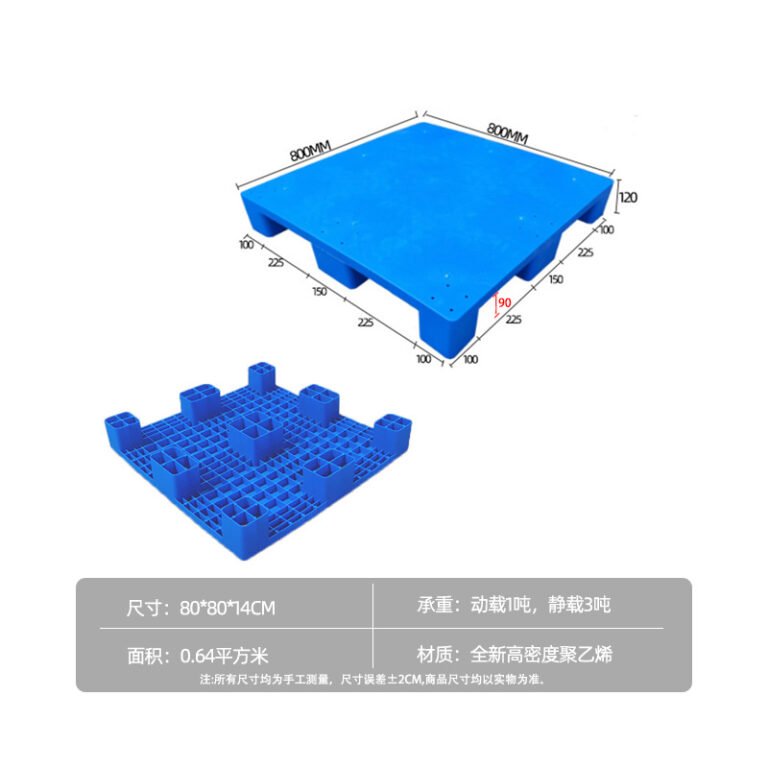
- Nine-leg designs: Lightweight, cost-effective
- Nestable pallets: Save space on return shipments
- HDPE material: Best moisture resistance
- Standard sizes: 1200×1000mm or destination-specific
Conclusion
For businesses engaged in international trade, plastic pallets eliminate the complexity, cost, and risk associated with ISPM 15 compliance. They provide a hassle-free solution that speeds up customs clearance and reduces total shipping costs.