 English
  Spanish
  French
  Arabic
  Portuguese
  Indonesian
 Why Pallet Size Matters
Choosing the right pallet size is crucial for optimizing warehouse space, transportation efficiency, and compatibility with material handling equipment. Using standardized sizes ensures seamless integration into global supply chains.
Plastic pallets are essential for modern logistics and warehousing operations. In this comprehensive guide, we explore everything you need to know about plastic pallets, including their benefits, applications, and how to choose the right plastic pallets for your business.
ISO Standard Pallet Sizes
The International Organization for Standardization (ISO) recognizes six standard pallet sizes:
| Size (mm) | Size (inches) | Region | Common Use |
|---|---|---|---|
| 1200 × 1000 | 47.24 × 39.37 | Europe, Asia | Most versatile |
| 1200 × 800 | 47.24 × 31.50 | Europe | EUR pallet |
| 1219 × 1016 | 48 × 40 | North America | Grocery industry |
| 1165 × 1165 | 45.87 × 45.87 | Australia | Standard AU |
| 1100 × 1100 | 43.30 × 43.30 | Asia | Japan, Korea, China |
| 1067 × 1067 | 42.01 × 42.01 | Europe, Asia | TCPA recognized |
Most Popular Plastic Pallet Sizes
1200 × 1000mm (47.24 × 39.37 inches)
The most widely used pallet size globally. Perfect for:
- Standard warehouse racking
- Container loading (fits 20ft and 40ft containers)
- Truck transportation
- General manufacturing
1200 × 800mm (47.24 × 31.50 inches)
Known as the EUR-pallet or Euro-pallet. Ideal for:
- European market distribution
- Retail supply chains
- Food and beverage industry
- Pharmaceutical logistics
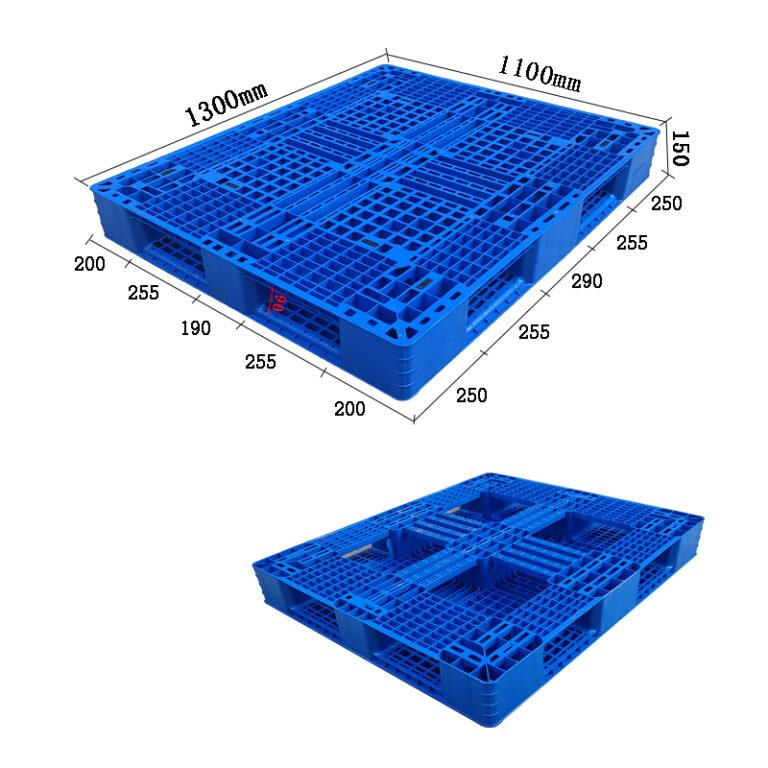
1100 × 1100mm (43.30 × 43.30 inches)
Standard in Asian markets. Best for:
- Japanese and Korean markets
- Chinese domestic distribution
- Chemical industry
- Electronics manufacturing
48 × 40 inches (1219 × 1016mm)
The standard North American pallet. Used for:
- US and Canadian distribution
- Grocery and retail
- Military logistics
- General warehousing
Container Loading Optimization
20ft Container (5,898 × 2,352 × 2,393mm)
- 1200 × 1000mm: 10 pallets (2 × 5)
- 1200 × 800mm: 11-12 pallets
- 1100 × 1100mm: 10 pallets
- 48 × 40 inches: 10 pallets
40ft Container (12,032 × 2,352 × 2,393mm)
- 1200 × 1000mm: 20-21 pallets
- 1200 × 800mm: 23-24 pallets
- 1100 × 1100mm: 20 pallets
- 48 × 40 inches: 20-21 pallets
How to Choose the Right Size
- Consider your market: Match the destination country’s standard
- Check warehouse racking: Ensure compatibility with existing systems
- Optimize container loading: Minimize wasted space
- Match product dimensions: Maximize pallet utilization
- Consider handling equipment: Forklift and pallet jack compatibility
Custom Sizes
When standard sizes don’t meet your needs, custom plastic pallets can be manufactured. Consider custom sizes when:
- Products have unusual dimensions
- Automated systems require specific sizes
- Space optimization is critical
- Industry-specific requirements exist
Conclusion
Selecting the right pallet size optimizes your entire supply chain. When in doubt, the 1200 × 1000mm size offers the best global compatibility and container loading efficiency.